
Introduction:
In the backdrop of the current controversies shaking the Catholic Church, it is crucial to delve into historical episodes that have marked its evolution over the centuries. The history of the Church is dotted with disagreements and conflicts, reflecting the human nature of those who lead it, rather than questioning the teachings of its founder, Jesus Christ.
Unlike other branches of Christianity, where disagreements often lead to divisions and the creation of new churches, the Catholic Church takes a more formal approach to addressing controversies. These disputes are usually resolved through instances such as the Congregation for the Doctrine of the Faith or, in cases of greater magnitude, through the convening of councils.
The purpose of this study is to unravel the causes that have led to dissensions, rejections, and demands from ultra-right factions within the Church. To achieve this, the analysis has been divided into five fundamental parts that cover from the essence and repercussions of an Ecumenical Council to contemporary ultra-right currents and schisms.
The Councils of Antiquity
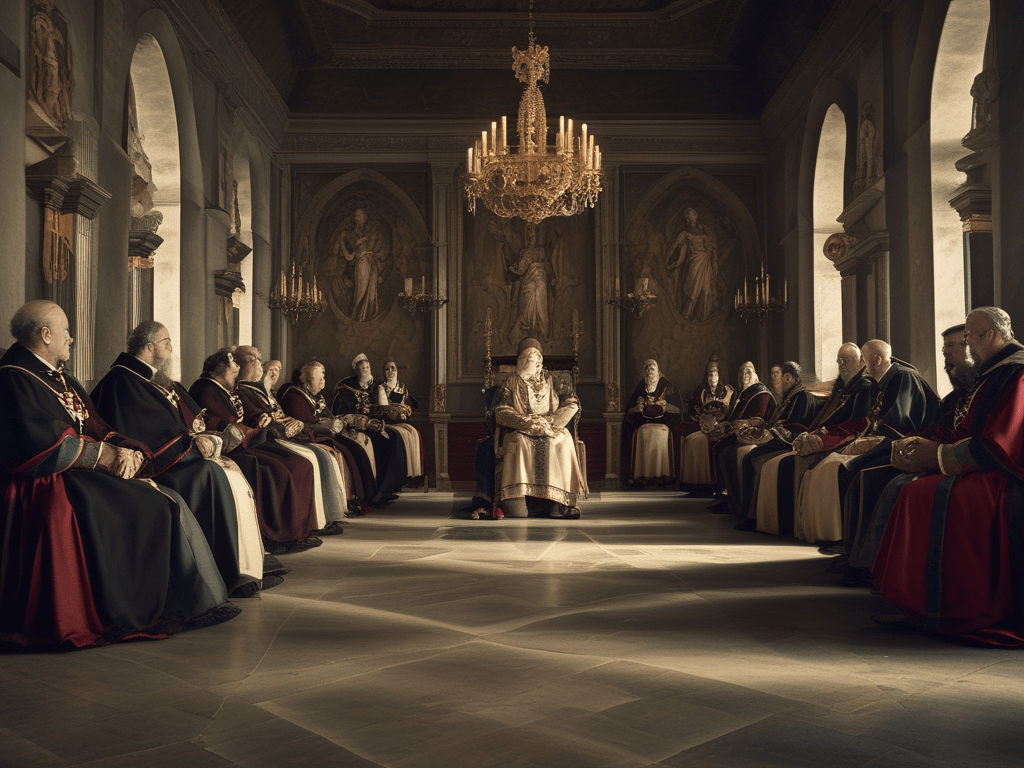
The Councils of Antiquity marked significant milestones in the history of the Church. The first council after that of Jerusalem took place in Nicaea in the year 325, with the attendance of 300 bishops. This council was convened to address and refute the heresy of Arius, who, surprisingly to many, was a bishop at that time.
Subsequent councils gathered with the purpose of refuting the heresies of dissenting groups, led by bishops, members of the clergy, or religious figures. Additionally, they faced challenges such as schisms in the Eastern churches and the need to define and clarify dogmas of faith.
To shed light on this complex situation, it is essential to briefly analyze the history of these councils. Throughout history, a total of 21 ecumenical councils have been held, excluding that of Jerusalem. Many of these councils were convened to address issues such as the refutation of heresies and the proclamation of fundamental dogmas.
These historical councils played a crucial role in consolidating doctrine and unity within the Church, facing theological and doctrinal challenges with determination and clarity.
The Council of Jerusalem not only resolved a crucial theological dispute but also laid the foundation for a Church that transcended cultural and ethnic barriers, emphasizing the importance of faith in Christ over the ceremonial practices of Jewish law.
Differences of Opinion in the Early Church and the Authority of the Apostolic College
Since the early days of the Church, diversity of opinions on the interpretation and application of faith has been a constant. Ultraconservatives advocate for strict adherence to norms and traditions, while other sectors seek to adapt teachings to the changing realities of the world. Amidst these tensions, the authority of the Apostolic College stands as a fundamental pillar for discerning and resolving doctrinal and pastoral differences.
In this context, Peter, a man of humble origin and without formal academic training, emerges as a central figure in the leadership of the early Church. Despite his imperfections and past mistakes, such as his denial of Jesus, Peter exercises his primacy as the head of the Apostolic College by defending his convictions and discerning God’s will amidst controversies.
On the other hand, James, the leader of the conservative group in Jerusalem, represents a more traditional and cautious stance regarding the integration of new ideas and practices in the Christian community. The discussions between Peter, James, and other leaders reflect the inherent tensions in the diversity of opinions in the early Church.
Despite differences and heated discussions, the authority of the Apostolic College prevails as a mechanism to achieve unity and harmony in the Christian community. The ability to reach reconciliation, even when initial positions differ, highlights the importance of humility, dialogue, and consensus-seeking in decision-making within the Church.
This episode of the Council of Jerusalem teaches us that, despite divergences and conflicts, the early Church was able to maintain unity in faith through discernment guided by apostolic authority and the search for God’s will amidst differences.
Councils of Antiquity: Defending the Faith and Uniting the Church
The councils of antiquity played a fundamental role in the history of the Church, marking crucial moments of unity, confrontation, and doctrinal clarification. The first council after that of Jerusalem took place in Nicaea in the year 325, with the participation of 300 bishops. This council was convened to address and refute the heresy of Arius, who surprisingly was a bishop.
Throughout the subsequent councils, the Church faced similar challenges, coming together to refute the heresies of dissenting groups led by bishops, members of the clergy, or religious figures. These gatherings sought not only to defend the faith of the Church but also to address schisms in the Eastern churches and to define and clarify the dogmas of the faith.
These councils were not only moments of theological confrontation but also of unity and strengthening of the Christian faith. Through dialogue, prayer, and joint reflection, the Church leaders sought to discern the truth and preserve unity amidst doctrinal differences and internal tensions.
The history of the councils of antiquity reminds us of the importance of ecclesial communion, the pursuit of truth, and the defense of the faith amidst challenges and controversies. These gatherings not only shaped the identity and doctrine of the Church but also laid the foundation for unity and cohesion in the body of Christ throughout the centuries.
Through the wisdom and guidance of the Holy Spirit, the councils of antiquity contributed to forging a stronger, more united Church faithful to the teaching of Christ. Their legacy endures to this day, reminding us of the importance of communion, dialogue, and the pursuit of truth in the life of the Church.
Characters Who Participated in the Defense, Definition, and Formation of the Deposit of Faith Tradition of the Catholic Church
Great ecclesiastical personalities participated and stood out in the councils that contributed to defining theological dogmas and articles of faith that formed the tradition of the deposit of faith of the Catholic Church. In the early councils of the Church, prominent figures include:
– Pope Saint Sylvester: Played a crucial role in the consolidation of the Church during a time of transition.
– Saint Athanasius, Bishop of Alexandria: Known for his staunch defense of orthodoxy against Arian heresy.
– Saint Ambrose: Participated in the First Council of Nicaea in the year 325, where over 300 bishops gathered.
– Saint Basil the Great, Saint Gregory of Nyssa, and Saint Gregory of Nazianzus: Fought against Arian heresy and contributed to the formulation of the Trinitarian doctrine.
– Saint Jerome, Saint Augustine, and Pope Saint Gregory the Great: Considered Fathers of the Western Church, they had a significant influence on the origins of the Catholic Church.
– Saint Thomas Aquinas and Saint Charles Borromeo: Participated in the Council of Lyon and the Council of Trent, bringing their wisdom to the teachings and disciplines of the Catholic Church.
These ecclesiastical figures not only played important roles in defining the Catholic faith but also contributed to the unity and cohesion of the Church throughout history. Their legacy endures as fundamental pillars in the formation and transmission of the tradition of the Catholic faith.
Conclusion:
Throughout the centuries, difficulties and misunderstandings within the Church have been addressed, refuted, and clarified to promote a deeper understanding and a more authentic experience of faith. These clarifications have emerged through exhaustive studies under the guidance of the Pope and the Magisterium of the Church.
It is important to highlight that controversies, rebellions, and divisions have not been instigated by common faithful, but mostly by high-ranking figures such as bishops, patriarchs, and influential religious leaders. In response to these situations, it has not been isolated individuals who have acted, but rather the entire Magisterium of the Church, enlightened by the guidance of the Holy Spirit, has faced these challenges.
This continuous process of discernment and doctrinal clarification has strengthened the Catholic faith throughout history, ensuring unity and fidelity to the teaching of Christ. The Church, through the authority and wisdom of the Magisterium, has demonstrated its commitment to truth and the preservation of apostolic doctrine amidst the trials and controversies that have arisen in its path.
The Church’s Response to Current Controversies:
Current controversies have been addressed with clarity and transparency through direct responses to the issues raised and the individuals involved. Dialogue has been promoted, and clarification of positions has been invited before the Congregation for the Doctrine of the Faith as the competent authority in these matters. Unfortunately, some individuals have chosen to reject personal dialogue, instead opting to attack the Pope and the Magisterium through social media, seeking to recruit followers by defaming the Supreme Pontiff and the teachings of the Church in a distorted manner.
In the face of a lack of willingness for constructive dialogue, the Congregation for the Doctrine of the Faith has acted in accordance with the norms and canons of the Church, taking disciplinary measures such as censure and the declaration of schism for those individuals involved, removing them from their positions and consecrations.
It is essential to remember that respectful dialogue, the pursuit of truth, and unity in faith are essential pillars for ecclesial life. In times of conflict, the Church turns to its norms and principles to safeguard the integrity of doctrine and ecclesial communion, always seeking the common good and fidelity to the teaching of Christ.
How to Address Current Controversies:
To address current controversies within the Church, it is important to follow certain fundamental principles that have been valid throughout history and can help illuminate the path towards resolution and unity:
– Trust in the guidance of the Holy Spirit in the Church: Recognize that divine guidance is present in the Church to assist in understanding and discerning the truth.
– Study controversies with a critical and non-emotional sense: It is essential to approach disputes with a rational and objective focus, avoiding emotions from clouding judgment and the search for truth.
– Neutrality and respect towards the Magisterium of the Church: It is important to maintain an attitude of openness and respect towards the doctrinal authority of the Church, avoiding taking sides against its teachings without deep and reflective analysis.
– Prayer and perseverance in faith with the grace of the Holy Spirit: Constant prayer and seeking the divine will are essential to find inner peace, wisdom, and the strength needed to face controversies with humility and confidence in God.
By following these principles, the ecclesial community can address current controversies constructively, seeking truth, unity, and the strengthening of faith amidst challenges and differences that may arise.
To Reflect:
To reflect and deepen our faith, it is enriching to read and meditate on the book of Acts of the Apostles, which provides an inspiring testimony of the expansion of the early Church and the action of the Holy Spirit in the Christian community.
May the grace of God accompany us on our spiritual growth journey and guide us in our search for truth and unity in faith.
May God bless everyone and fill us with wisdom and love to follow His path!
Note: If you wish to continue enriching your faith and engaging in meaningful discussions, I invite you to subscribe to the blog to receive new articles as soon as they are published.
May the light of truth and the love of God always be with you!
Article Sources:
1. Ecumenical Councils (Special)
– Author: n/a
– Source:[www.mercaba.org](www.mercaba.org)
2. This is how the pope’s election process works, MELISSA SARTORE
– Author:Melissa Sartore
– Source: Not specified
3. HISTORY OF THE CATHOLIC CHURCH, Pedro García Cmf
– Author: Pedro García Cmf
– Source: Parish of the Heart of Mary, San Salvador, El Salvador C. A
4. Catholic.net
– Source: Catholic.net
 Reflexiones Espirituales
Leave a comment