
Mark 1:14-15
Introduction
We find ourselves on the threshold of proclaiming the Kingdom of God “HERE AND NOW.” The arrival of the Kingdom of God has manifested gradually, presenting itself as a gift that has been bestowed upon us. Considering this Good News announced by Jesus, we are left with the decision about His person. Believing in the Gospel invites us to a deep and transformative commitment.
The Kingdom of God, known in Hebrew as “MALKUTAH,” is not limited to a physical place, a specific situation, or a group of people. Rather, it is defined by the fact that God reigns in the heart of everyone.
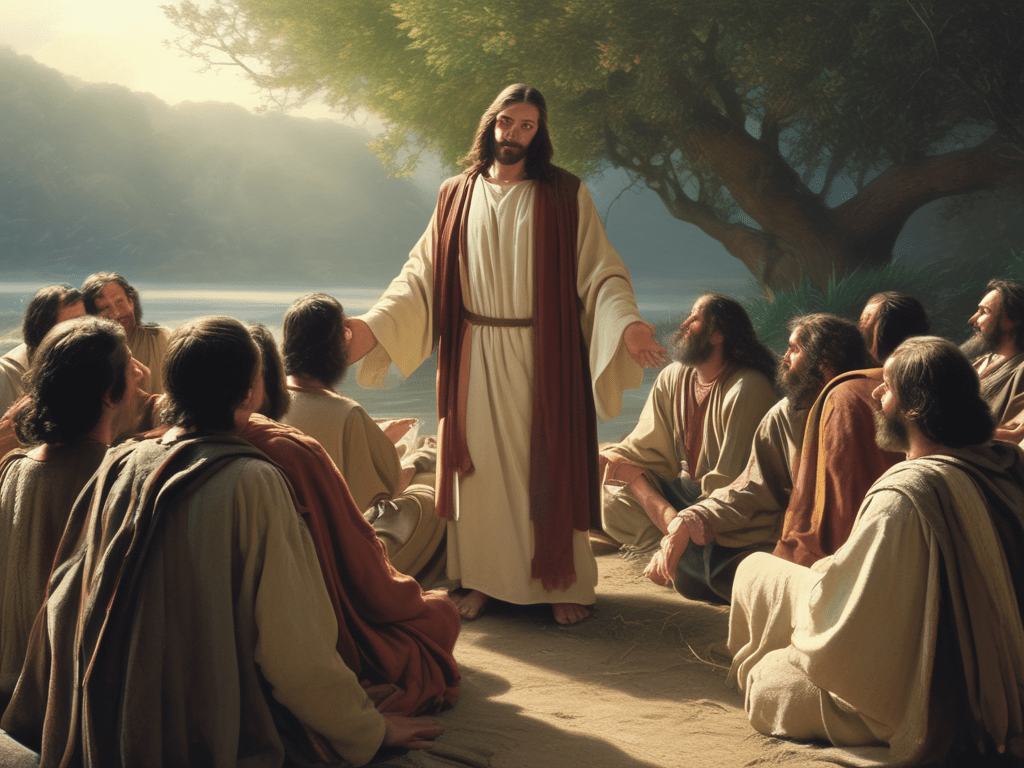
After the arrest of John, Jesus went to Galilee and began to proclaim the Good News of God. His message was clear and urgent: “The time has come; the Kingdom of God has come near. Repent and believe the Good News.”
Considerations on the Passage
When approaching this biblical passage, it is essential to consider certain contextual situations. Saint Chrysostom points out that Saint Mark follows the order established by Saint Matthew. The expression “after John was arrested” does not necessarily imply that this event occurred at once after Jesus’ retreat in the desert.
So, we can conclude that there was an interval between John’s arrest and the beginning of Jesus’ preaching. Both Saint Bede and Saint Jerome agree that Jesus begins His ministry while John continues to preach at the Jordan. But with John’s arrest, the old law is abolished, making way for the Gospel. This transition can be corroborated in the Gospel of Saint John (3:25-30), where the relationship between John’s ministry and that of Jesus is highlighted.
Judging
For those of us dedicated to evangelization, this event holds profound significance. Before Jesus began His ministry, John the Baptist was the prominent prophet of his time. But when Jesus appeared on the scene, John stepped aside to make way for the true Lamb of God.
Those of us who work in evangelization must learn to set aside our “self” (I do, I say, I am and allow Jesus to take center stage. We do not preach about ourselves; rather, we make known the Son of God. Our person, desires, and attitudes should not overshadow the message of the Gospel. While it is sometimes necessary to bear witness to the grace of God in our lives, we must always do so with the intention of glorifying God; as Saint Ignatius of Loyola said: “for the greater glory of God” (A.M.D.G.).
The Testimony of John the Baptist
The testimony of John the Baptist is not limited to his words; it is manifested in his attitude of humility and his willingness to step aside when his mission came to an end. This invites us to show our attitude as leaders and servants in evangelization. Often, we refuse to yield leadership to the new leaders that the Holy Spirit is raising up in our communities. We cling to our positions, and as a result, we hinder the development and preparation of the new blood that is emerging in our communities.
Action
Our ministry in the community—whether social, ecclesial, or familial—is not limited to leadership; rather, it focuses on teaching and preparing new generations to become leaders of change in the social and religious environments in which we work. Furthermore, it is essential to discern the right moment to return to the ranks of the faithful, bearing witness to humility, obedience, and generosity.
By doing so, we not only empower others but also embody the spirit of service that Jesus exemplified. This act of stepping back allows for the growth of new leaders, fostering an environment where the Kingdom of God can flourish through the contributions of all members of the community.
To Achieve This, We Must:
1. Read and Meditate on the Lives of the Saints:
Studying their virtues, especially humility, faith, and generosity, provides us with concrete examples to follow.
2. Invoke the Holy Spirit:
Asking for His guidance in our family, social, and community life is essential for making wise and just decisions.
3. Teach by Example
Acting in a manner consistent with our teachings has a much greater impact on new generations than merely conveying words.
4. Be Aware of the Inclinations of New Generations:
These are more action-oriented and reflective. So, we must show them that for our actions to have a positive impact, they need to be supported by prayer and the practice of virtues.
By implementing these steps, we can foster a nurturing environment that encourages the growth of future leaders who are grounded in faith and committed to making a difference in their communities.
Anecdote
Years ago, in the city of San José del Cabo, there was a religious sister who taught at the only Catholic school in the city. Aware that her stay in the place was temporary, and taking advantage of her ministry with young people, she decided to invite them to form a choir to enliven the Masses, as there was no music ministry.
The kids felt motivated and began taking singing and guitar lessons. Among them was a young man who, unbeknownst to the sister at that moment, had attempted suicide due to the difficulties he faced after suffering from polio in his childhood. His lower limbs were affected, and he needed two crutches to walk.
Every week, he was seen coming down with his backpack and guitar on his back to rehearse. The choir debuted at a Christmas Mass, and the community was very pleased with their performance. After that, they continued singing at Sunday Masses. This young man showed a remarkable talent for music and soon excelled both with the guitar and his voice.
When the time came for the sister to move on to another mission, she realized that the kids needed to continue their journey. So, she began to prepare this young man to take on the leadership of the group. Many years later, the sister had the opportunity to attend a meeting of the Diocese of La Paz, where she reunited with this young man.
During a friendly conversation, the young man, now married with children, shared how his perspective on life had changed, all thanks to the trust she had placed in him. He was now the music leader of the parish, which had grown over time, and he remained busy with his work, family, and his ministry of evangelization.
Conclusion
Our work as teachers, parents, and community leaders has a beginning and an end. Just like Saint John the Baptist, we must recognize the right moment to step back and allow new generations to continue the work of leadership and the preparation of future leaders.
Similarly, Jesus concluded His ministry of evangelization, but not before preparing the leaders who would carry out His mission to extend the Kingdom of Heaven. This legacy of formation and empowerment is essential for the growth of our communities and the continuity of faith.
By fostering an environment where new leaders can emerge, we make sure that the values and teachings we hold dear are passed on and adapted to meet the challenges of each new generation. In doing so, we contribute to a vibrant and resilient community that thrives on faith, service, and love.
Reflection
– Am I preparing my children to be positive agents of change in the community in the future?
Reflecting on the education and values we pass on to our children is fundamental. Are we teaching them the importance of empathy, generosity, and service to others? Are we providing them with the tools to become responsible leaders committed to their environment?
– As a member of today’s society, am I a positive agent of change or an obstacle to others’ progress?
It is important to evaluate our role in society. Are we supporting others in their growth and development, or are our actions and attitudes limiting their potential? Being aware of our impact on the lives of others allows us to make decisions that align more closely with the common good.
– In the religious community where I work, am I a leader who teaches by example and promotes new vocations for evangelization?
Authenticity in leadership is key. Are we living according to the values we preach? Do we foster an environment that inspires others to follow the path of faith and service? Reflecting on our role as leaders can help us be more effective in our mission of evangelization.
Invitation
We invite you to share these writings with your friends and family. Together, we can foster an enriching dialogue about evangelization and leadership in our communities. Additionally, we encourage you to subscribe to our blog to continue receiving inspiring content and resources that will help you on your faith journey and in the mission of evangelization. Let us unite in this beautiful work of spreading the message of love and hope to all!
Sources of the Article
– Catena Aurea, Comentarios al Evangelio, San Marcos, Santo Tomás de Aquino, Ivory Falls Books, 2016
– Biblia de Jerusalén, Editorial Desclée, 1992
– Comentario Al Evangelio de Marcos, Juan Mateos, S.J. Centro de Reflexión Teológica, 1990
– La Noticia de Jesús según San Marcos, Luis Mosconi, Ediciones Dabar, 1993
 Reflexiones Espirituales
Leave a comment