

Mark 1:32-34
Before sunset, when the sun was already setting, they began to bring to Jesus all the sick and those possessed by evil spirits. The whole town was gathered at the door. Jesus healed many who were ill and drove out many demons, but he would not let the demons speak because they knew who he was.
Introduction
In this passage, we find ourselves at a moment of transition between everyday life and the divine mission of Jesus. The scene unfolds at the end of the day, as the light of the sun begins to fade, symbolizing the shift from the mundane to the spiritual. The crowd, eager to find relief and healing, gathers at the door where Jesus is, the only one capable of offering them the healing they seek.
Jesus not only cares about the physical health of individuals but also recognizes the importance of mental and social well-being. His mission is holistic: to save the human being in its entirety, freeing them from the bonds that oppress them and empowering them to make decisions that integrate them into society as agents of change. In this sense, Jesus invites us to consider our own health in all its dimensions, reminding us that true redemption encompasses the body, mind, and spirit.
Reflections
1. The Urgency of Healing: What does the crowd gathered around Jesus tell us about the human need for healing? How can we recognize and tackle the needs of those around us?
2. The Wholeness of Jesus’ Mission: How can we apply Jesus’ holistic approach in our daily lives? In what ways can we work on our physical, mental, and spiritual health?
3. Resistance to Recognition: Why did Jesus not allow the demons to speak about his identity? What does this teach us about the importance of humility and control over our own narrative?
4. Agents of Change: How can we be agents of change in our community, after the example of Jesus? What concrete steps can we take to help those who are suffering?
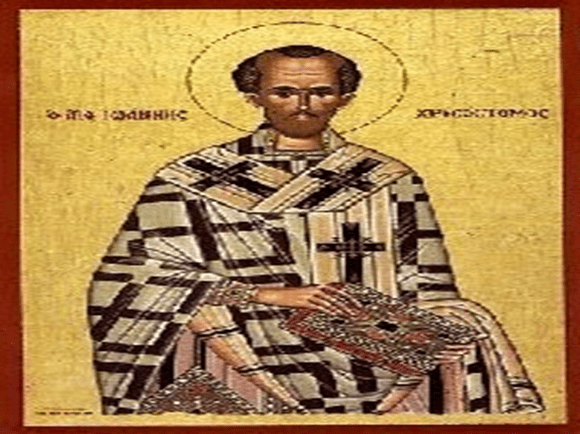
Saint John Chrysostom
Saint John Chrysostom, known as “Golden Mouth,” for his exceptional eloquence, was a prominent Church Father born in Antioch around the year 347. As the Patriarch of Constantinople, he was noted for his fervent defense of social justice and his criticism of corruption, which earned him both popular admiration and powerful enemies, including Empress Eudoxia. His life was marked by passionate preaching and an unwavering commitment to reform, which ultimately led to his exile and death in 407. His legacy endures in the Christian tradition, being remembered as a model of integrity and dedication to the service of God.
Biography of Saint John Chrysostom
Saint John Chrysostom is a central figure in the history of Christianity, not only for his eloquence but also for his deep commitment to justice and truth. His life and work show a constant wish to bring people closer to God through preaching and teaching. His criticism of social injustices and his defense of the poor make him a reference point for those seeking to live their faith in an active and committed manner.
Comparison of Mark 1:34 and Luke 4:41
Saint Thomas Aquinas, referencing this passage, notes that Saint John Chrysostom explained that “where it says many, it should be understood as all, according to the custom of Scripture.” This interpretation suggests that Mark’s focus is more on the essence of the miracle rather than the number of people healed.
Furthermore, Saint Thomas clarifies that the account in Luke 4:41 does not contradict Mark 1:34. Luke mentions that “demons were coming out of many, crying out and saying, ‘You are the Christ, the Son of God,’” and adds that Jesus, “rebuking them, did not allow them to speak.” This omission of details in Mark is due to his intention to keep brevity and focus on the purpose of the demons’ words, which is the messianic secret.
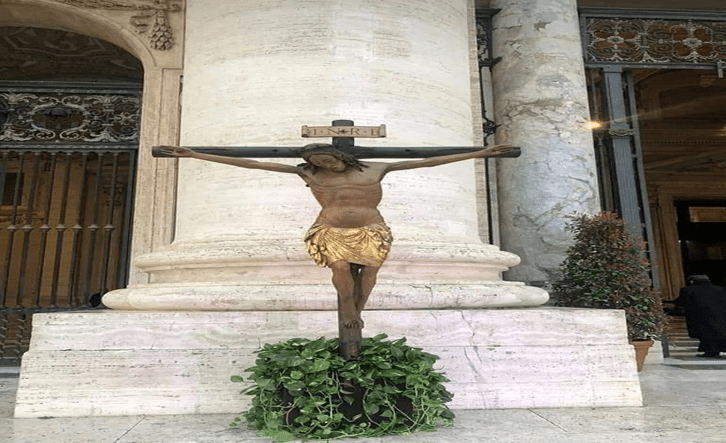
The Messianic Secret
It is important to emphasize Jesus’ prohibition to the demons, as Saint Mark highlights the messianic secret throughout his gospel. This aspect is crucial because Jesus does not wish to be recognized as a Messiah according to the expectations of his time, which envisioned him as a warrior leader and victor in the style of Moses. Instead, Jesus seeks to make it clear that his kingdom is spiritual and transcends the limitations of this world. This concept is fully revealed in the figure of the “Suffering Servant,” which is manifested in the passion, death, and resurrection of Jesus.
Reflection Questions
1. The eloquence of Saint John Chrysostom: How can we learn from the life of Saint John Chrysostom in our own communication and defense of justice in today’s world?
2. Interpretation of Scriptures: What does Saint Thomas’ interpretation teach us about the relationship between the accounts of Mark and Luke? How can we apply this approach to our understanding of other biblical passages?
3. The messianic secret: Why do you think Jesus chose to keep his identity as the Messiah a secret? What implications does this have for our understanding of his mission and his kingdom?
4. Spiritual kingdom vs. human expectations: How can we discern between our own expectations of what the kingdom of God should be and the reality of its spiritual message? What steps can we take to align ourselves more closely with Jesus’ vision?
Judging
In our modern world, it is difficult to be astonished by situations like those described in the gospels. Healing still take place in a context that, although extraordinary, we often try to overshadow, allowing the presence of Jesus in the contemporary world to go unnoticed. This tendency to reduce supernaturalism shows our distrust or skepticism toward what we can’t explain.
False Prophets
Unfortunately, in this context, false prophets also emerge, seeking to draw attention to the action of Jesus in the world but with deceptive intentions. Many of the miracles presented on television are, in reality, rehearsed and fraudulent, designed to scam viewers and attract followers to their “churches.” These leaders, by raising large sums of money, enrich themselves personally, often at the expense of those who genuinely seek faith and healing.
Jim Bakker
An emblematic case of this phenomenon is that of Jim Bakker, a Protestant pastor who became famous in the 1980th for his television program “The PTL Club.” Despite his early success, in 1989 he was accused of fraud and embezzlement, which resulted in his conviction and a prison sentence. His story had a significant impact on the public perception of televangelists and highlighted the dangers of exploiting faith for personal gain.
Religious Manipulation for Personal Gain
Today, there are many modern churches whose founders seem to have the sole wish of attracting people to their institutions, not necessarily to extend the Kingdom of Heaven, but to increase their bank accounts. This pursuit of profit often overshadows the true message of the Gospel and distorts the mission of the church.
Anecdote
For a time in the United States, I listened to a program by a pastor of a Protestant church who spoke with great enthusiasm about the Gospel and claimed to carry out instant healing. A friend of mine, very impressed, asked if she can call to schedule an appointment for prayer. Although I warned her to be cautious, I respected her decision.
One day, my friend called to make an appointment, and what happened next opened her eyes and completely disillusioned her. During the phone call, she was informed that the appointment would cost $25. She promptly hung up, and when she shared her experience with me, she said, “If I want someone to pray for me in the Catholic Church’s prayer group, it’s free and much more effective, without the advertising of this so-called church.

Acting
We are living in a historic moment on all levels: social, political, and spiritual. Conspiracy theories have confused many well-meaning people who wish to follow Jesus in their daily lives. Unfortunately, this has become a challenge for the average parishioner, whose religious preparation is minimal and poorly documented.
Benjamin Franklin said, “An investment in knowledge always pays the best interest.” This statement is especially true in the religious realm. Nonetheless, it is not just about educating oneself religiously; it is essential to seek teachers, groups, and spiritual directors who are orthodox in their thinking. We must avoid extremes that never lead to the full truth and that can be categorized as “fascist or Pharisaical.”

The Rule of “As Much As”
The “as much as” rule of Saint Ignatius of Loyola refers to how we should discern and act in our spiritual lives. This rule establishes that we should give more importance to things that lead to salvation and spiritual good, and less to those that do not. In other words, it is about evaluating things based on their spiritual value and their ability to bring us closer to God.
In the context of Saint Ignatius’s “Spiritual Exercises,” this rule is found in “Annotation 5.” In this annotation, Saint Ignatius explains that one should consider the “as much as” about the things that help a person progress in their spiritual life and in their relationship with God.
Hands on Deck
Sometimes, we feel overwhelmed by the evil and uncertainty in the world, in society, and often within our own families. It is necessary to take action if we want a better world in all dimensions of life. We should not wait for society to change from the outside; we must start building our own future, our families, and our secular and religious society from within, beginning with ourselves.
Steps to Follow
In any construction and in the actions, we undertake, it is essential to evaluate by asking certain questions: “what,” “who,” “how,” and “when.”
1. What do I seek to do with my life?
– What is the goal I want to achieve?
– What is my personal knowledge about this?
– Am I seeking only material or spiritual good, or both?
2. Who can guide me?
– Who can help me orient my life or my thoughts selflessly?
3. How can I start to discern what is truly important in my life?
– How can this lead me to achieve the goals I pursue?
4. When and where can I start a new life that is meaningful to me?
– What concrete steps can I take today to start this process?
Practical Examples for Applying the Rule of “As Much As”
1. Focus on Prayer Time: Dedicate a specific time each day for prayer and meditation. Start with a few minutes, and as you become more comfortable, gradually increase the duration. This practice will help you create a deeper connection with God and discern His will in your life.
2. Evaluate Resource Use: Think about how you use your time, money, and energy. Ask yourself, “Am I investing in things that truly nourish my spirit and my community?” If you find that you spend a lot of time on activities that do not contribute to your spiritual growth, consider reducing them and dedicating that time to more meaningful activities, like volunteering or studying the Bible.
3. Join the Community: Get involved in your church or local community. This can be through Bible study groups, service activities, or community events. By doing so, you are not only growing in your faith but also contributing to the well-being of others, acting to the extent that you can.
4. Practice Generosity: Consider how you can be generous with your resources. This doesn’t always mean giving large sums of money; sometimes, it’s about offering your time or skills. For example, if you are good at cooking, you prepare meals for those in need in your community.
5. Consider on Daily Decisions: Before making important decisions, take a moment to pray and think. Ask yourself how that decision aligns with your values and faith. This can apply to decisions about work, relationships, or lifestyle choices.
6. Set Spiritual Goals: Define specific and achievable goals in your spiritual life. For instance, you might aim to read a spiritual book each month or attend a spiritual retreat once a year. This will help you stay focused and grow in your faith consistently.
Final Reflections
When taking action, it is vital to remember that every small step counts. Personal and community transformation begins with conscious decisions and a genuine commitment to spiritual growth. By investing in our knowledge and discernment, we not only draw closer to God but also become agents of change in the world around us. These questions and reflections invite us to take action, to be proactive in our spiritual lives, and to build a future that reflects the values of the Kingdom of God.
1. The Search for the Authentic: How can we discern between what is authentic and what is false in the spiritual realm? What criteria can we use to evaluate the integrity of religious leaders?
2. The Manipulation of Faith: What impact does the commercialization of faith have on the public perception of Christianity? How can we counteract this trend in our communities?
3. The True Mission of the Church: How can we guarantee that our actions and those of our church align with the mission of extending the Kingdom of God, rather than seeking personal gain?
4. The Importance of Community: What role does community play in our spiritual lives? How can we foster an environment of genuine support and prayer, free from economic interests?
These questions invite us to think on the authenticity of our faith and how we can live it out in a coherent and committed manner, avoiding the traps of manipulation and fraud.
Conclusion
In a world filled with confusion and challenges, it is essential for each of us to take an active role in building the Kingdom of God. Education and discernment are fundamental tools that enable us to navigate the complexities of modern life and remain steadfast in our faith. By investing in our spiritual knowledge and seeking the guidance of teachers and orthodox communities, we can strengthen our relationship with God and act effectively in our lives and in society.
Saint Ignatius’ principle of “as much as” reminds us of the importance of prioritizing what truly matters: our salvation and spiritual well-being. By putting our hands to work and committing ourselves to live according to these principles, we not only transform our own lives but also positively impact those around us.
Invitation to Spread the Kingdom
We invite you to join this mission of spreading the Kingdom of God. Share this article with friends, family, and on your social media. By doing so, you are not only contributing to the dissemination of a message of hope and faith, but you are also encouraging others to think about their own spiritual lives and take action on their journey toward God.
Each of us has a role to play in building a better world. Together, we can be agents of change, bringing the love and truth of Christ to every corner of our society. Let us act today and be a light during darkness!
Invitation to Share Experiences
We would love to hear your experiences and reflections on how you apply the principle of “as much as” in your daily life. Have you found creative ways to act on your faith? What changes have you made in your routine that have brought you closer to God and your community? We invite you to share your stories and insights in the comments. Together, we can inspire one another and build a stronger community in our pursuit of living fully in faith. We look ahead to your contributions!
Invitation to Read “My Path”
We invite you to discover the inspiring autobiography “My Path,” written by the Venerable M. Julia Navarrete Guerrero, a mystical figure from Mexico in our times. In its pages, M. Julia shares her profound spiritual journey, experiences, and reflections that can enrich your own life of faith. This book is a unique opportunity to learn about her legacy and gain insights from her wisdom.
If you would like more information or wish to buy a copy, please feel free to contact us at: causavmjulia74@gmail.com.
Immerse yourself in this transformative reading and let its message resonate in your heart!
@vocatios.blog
@anamriaguzman2234
Sources of the Article
Comentario al Evangelio de San Marcos, Juan Mateos S.J. Centro de Reflexión Teológica, 1990
La Noticia de Jesús Según San Marcos, Luis Mosconi, Ediciones Dabar, 1990
Santo Tomás de Aquino, Catena Aurea, Comentarios al Evangelio de San Marcos
El Evangelio Según San Marcos, Salvador Carrillo Alday
 Reflexiones Espirituales
Leave a comment